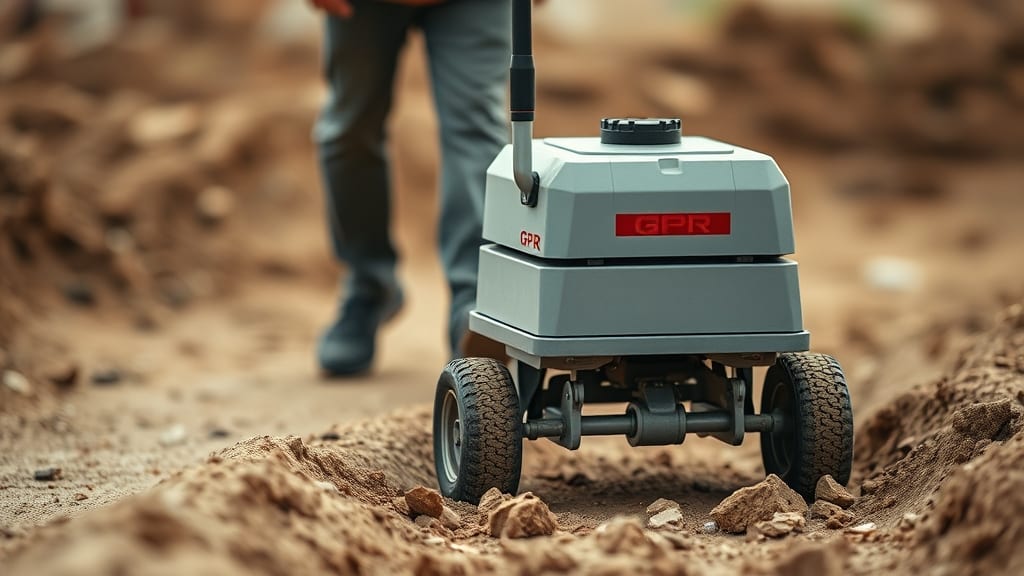
GPR Utility Locating Services in Idaho
Accurate underground utility detection across Idaho before every dig. Ground penetrating radar technology that maps buried pipes, conduits, and cables — fast.
Get a Free QuoteWhy Idaho Crews Trust GPR for Utility Locating
Digging blind in Idaho's varied soil conditions — from the Snake River Plain to the foothills around Boise — puts crews, infrastructure, and budgets at serious risk. Ground penetrating radar sends pulses deep into the ground and returns a precise picture of what lies beneath, including gas lines, water mains, electrical conduit, and fiber runs that public utility records often miss. Our GPR utility locating scans integrate with your existing site plans so project managers and excavators have a clear, verified map before the first bucket breaks ground. Whether you are working on a residential lot in Meridian, a commercial build-out in Nampa, or a highway corridor in Twin Falls, accurate utility locating is the first step to a safe, on-schedule project.
How Our GPR Utility Locating Process Works
Site Consultation & Scope Review
We discuss your project location in Idaho, dig area dimensions, and any known utility information so we can plan an efficient scan strategy from the start.
Ground Penetrating Radar Scan
A GPR antenna is moved methodically across the target area in a grid pattern, collecting subsurface reflection data at multiple frequencies to detect utilities at varying depths.
Data Interpretation & Mapping
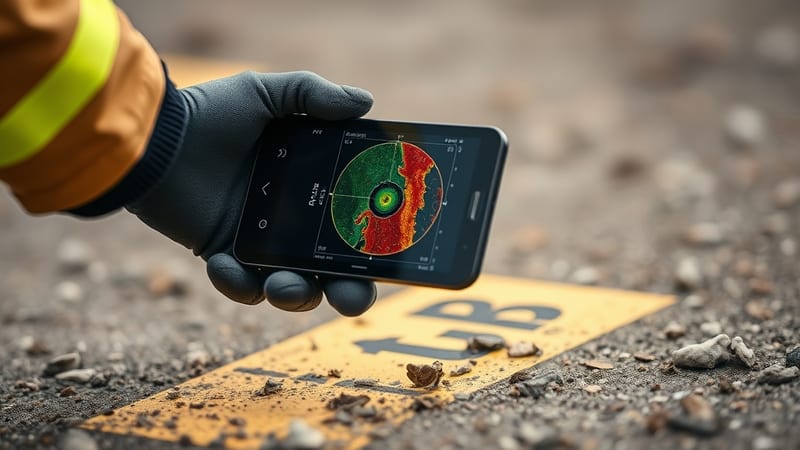
Our technicians analyze the scan data on-site, identifying utility signatures and cross-referencing with available as-built drawings to produce a clear, layered utility map.
Physical Marking & Documentation
Detected utilities are marked directly on the ground using color-coded paint or flags per industry standards, and a digital report with annotated maps is provided for your records.
Project Handoff & Support
We walk your team through findings before you dig, answer questions, and remain available if conditions change or additional scanning is needed during excavation.
Frequently Asked Questions About Utility Locating in Idaho
Does GPR utility locating replace an 811 call in Idaho?
No — you should always call 811 before digging in Idaho to have public utilities marked. GPR utility locating is a complementary service that finds private utilities, abandoned lines, and infrastructure that 811 does not cover, significantly reducing your risk of a strike.
How deep can GPR detect utilities?
Detection depth depends on soil composition, moisture, and the utility material. In typical Idaho soils, GPR can reliably detect utilities from a few inches down to around 10–15 feet. Dry, sandy soils common in southern Idaho often allow deeper penetration than wet or clay-heavy ground.
How long does a utility locating scan take?
Scan duration depends on the size of the area and site access. A standard residential lot in Idaho can often be completed in two to four hours. Larger commercial or municipal sites are scoped individually, and we can typically schedule within 48 hours of your request.
What types of utilities can GPR locate?
GPR can detect metallic and non-metallic utilities including water lines, gas pipes, electrical conduit, telecommunications conduit, fiber optic runs, sewer laterals, and storm drain pipes. It can also identify abandoned utilities not present on current records.
Is GPR utility locating required for Idaho construction projects?
While Idaho does not mandate GPR scanning on every project, many general contractors, municipalities, and insurers now require private utility locating on sensitive sites. It is also strongly recommended any time excavation occurs near critical infrastructure or in areas with historically dense underground utility networks.
Request Utility Locating Services in Idaho
Don't dig without a complete picture of what's underground. Contact our Idaho GPR utility locating team today for a fast quote and scheduling — we serve Boise, Nampa, Meridian, Twin Falls, Coeur d'Alene, and communities statewide.